
How to Reduce Technical Debt in a Small Team Without Stopping New Features
Technical debt slows every new feature and hides bugs. Here is how to reduce technical debt step by step, while your small team keeps shipping.
 AivoPass Editorial TeamReviewed by our agent setup specialists
Updated
Reading time4 min

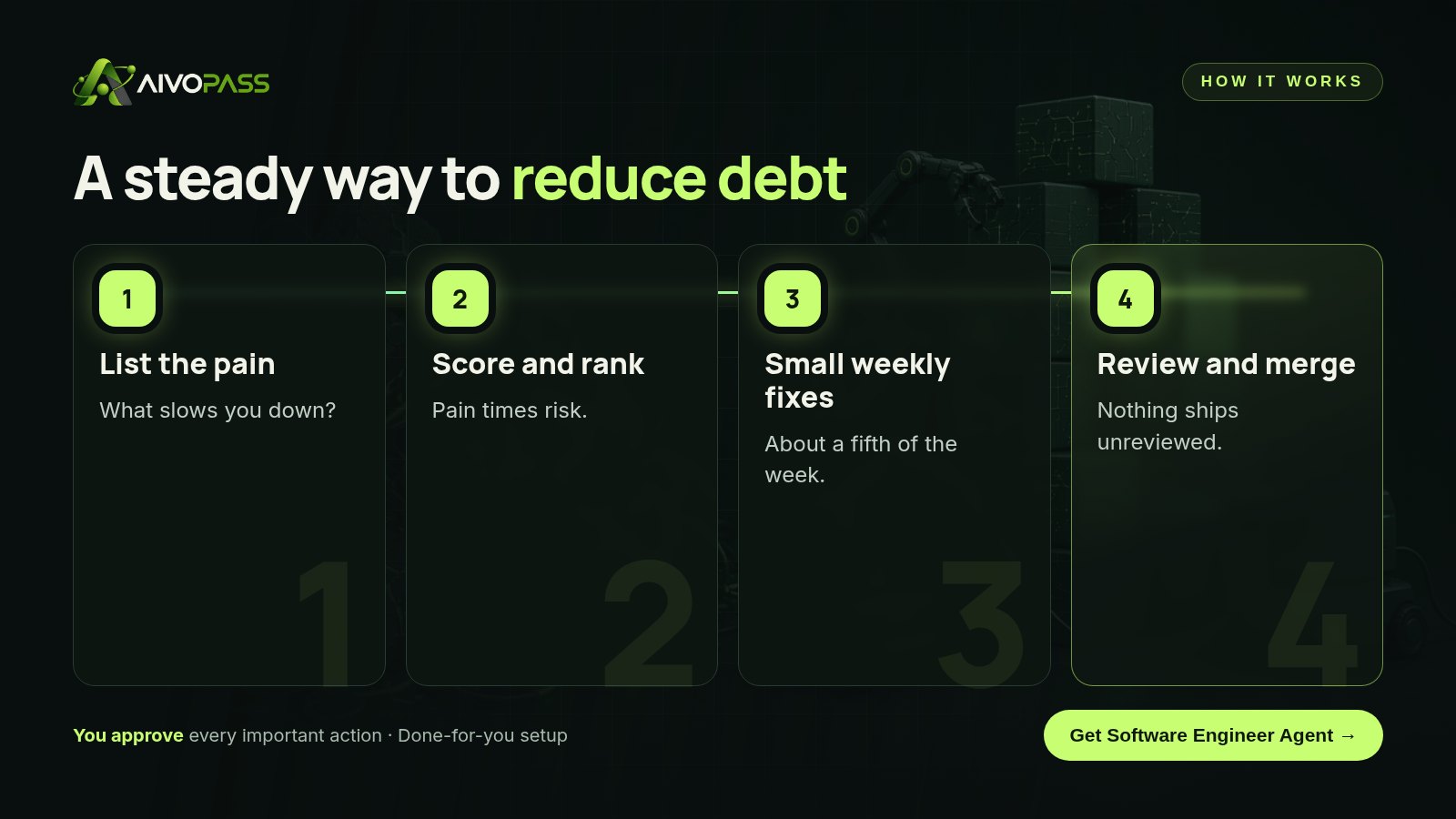
To reduce technical debt, list the problems that slow your team down, score each by pain and risk, and fix the worst ones in small steps, using about a fifth of each week instead of a big rewrite. Add tests before changing risky code. Software Engineer Agent handles safe cleanup such as tests, dependency updates and small refactors in your repository, and asks for review before anything ships.
Every software product gathers shortcuts over time: a quick fix before a launch, a library nobody updated, a feature built without tests. Each one seems small, but together they make every new change slower and riskier. If your team says “that should be easy” and it takes a week, it is time to reduce technical debt.
This guide explains the warning signs, a simple way to score debt and a steady weekly rhythm that keeps new features moving. It also shows how Software Engineer Agent takes on safe cleanup work in your repository, such as tests, dependency updates and small refactors, and always asks for review before anything ships.
See Software Engineer Agent Done-for-you setup · You approve every action
What is technical debt?
Technical debt is the extra future work created by shortcuts and outdated code. Like financial debt, it charges interest: each new feature takes longer, bugs return and developers hesitate to touch fragile areas. Some debt is a sensible trade-off, but unmanaged debt slowly drains a small team’s speed.
Warning signs you have too much
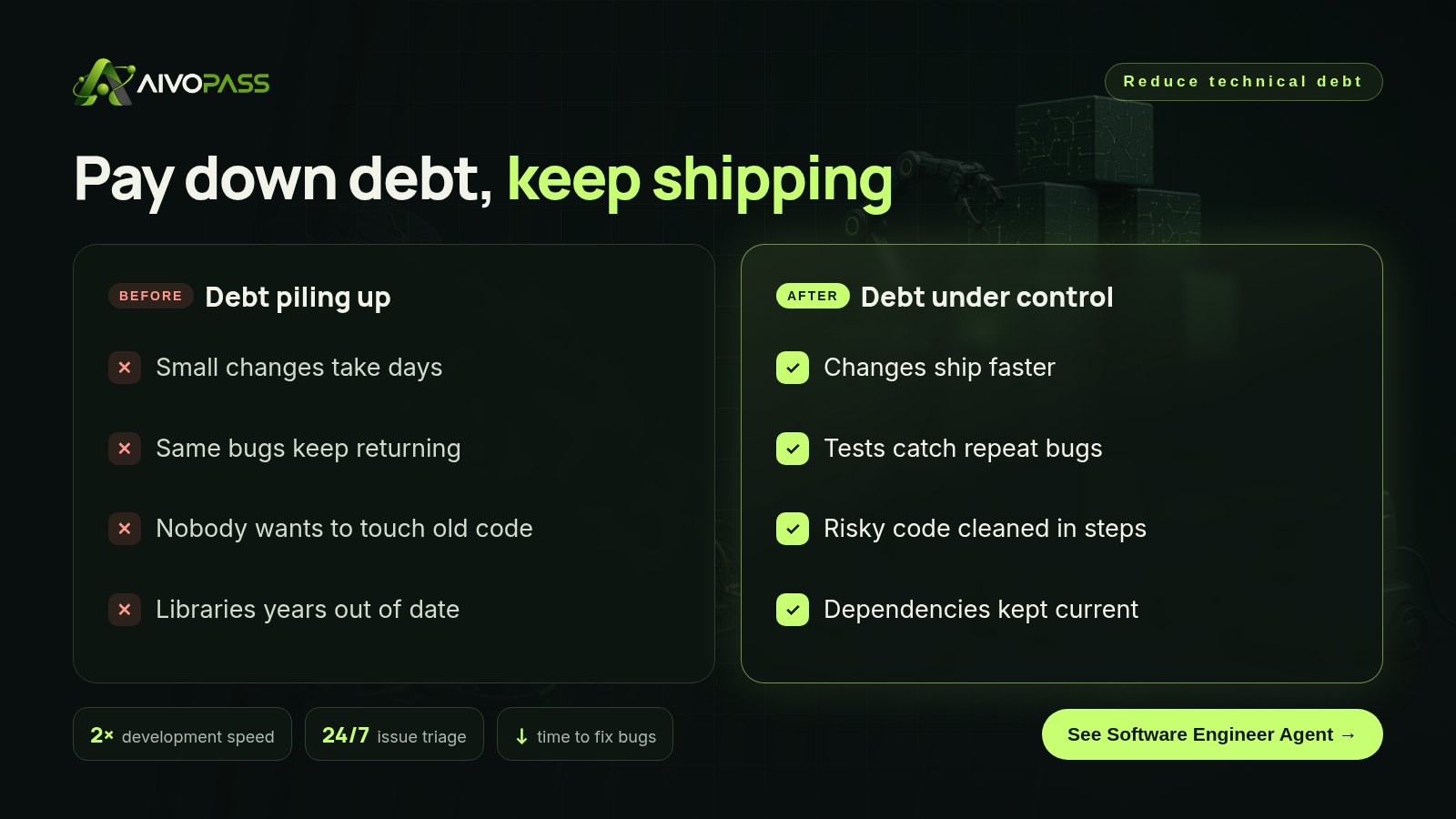
- Simple changes take several days.
- The same bugs come back after being fixed.
- Developers avoid certain files or features.
- Libraries and frameworks are years out of date.
- There are few or no automated tests in important areas.
- New team members take weeks to become productive.
How Software Engineer Agent works
- Writes and fixes code in your repository.
- Triages incoming issues so real problems surface quickly.
- Monitors production errors and links them to their cause.
- Asks for review before merge, every time.
Before and after
| Area | Debt piling up | With Software Engineer Agent |
|---|---|---|
| Tests | Missing in risky areas | Added before changes |
| Dependencies | Years out of date | Updated in small, reviewed steps |
| Repeat bugs | Fixed by hand each time | Root cause fixed with a test |
| Team focus | Split between features and fires | Features, with steady cleanup in the background |
Build a simple debt register
Write down each debt item and give it two scores from 1 to 3: how much pain it causes today and how risky it is to leave. Multiply them and start with the highest numbers.
| Debt item | Pain (1–3) | Risk (1–3) | Priority |
|---|---|---|---|
| No tests on checkout | 3 | 3 | Fix first |
| Outdated payment library | 2 | 3 | Fix soon |
| Duplicate email code in three places | 2 | 1 | Next month |
| Old admin page styling | 1 | 1 | Later |
The steady 20 percent rhythm
- Spend about a fifth of each week on the top debt items.
- Keep each fix small enough to review quickly.
- Add tests before changing risky code.
- Re-score the register once a month.
- Celebrate removed debt the same way you celebrate new features.
A steady rhythm beats a big rewrite. Small, tested changes deliver benefits within weeks and carry far less risk.
Who it is for
Startups
A startup in Toronto shipped fast for two years and now feels every change getting slower.
Online stores
An online store team in Edmonton runs a custom shop that nobody has updated in a long time.
Agencies maintaining client apps
An agency in Quebec City maintains older client apps and needs safe, steady upkeep.
Results to expect
These figures are typical estimates, not guarantees. Results depend on your codebase, tests and team.
Example: an online store in Edmonton
A three-person team in Edmonton runs a custom online store for outdoor gear. Small changes, like adding a new shipping option, were taking a week because there were no tests on checkout and the payment library was badly out of date. They listed their debt, scored it and set aside Friday mornings for cleanup. Software Engineer Agent wrote tests around checkout first, then prepared the library update as a series of small pull requests, each reviewed by the team. It also triaged incoming bug reports and linked a repeat error to a duplicate piece of code. Two months later, the next shipping change took one day.
Mistakes to avoid
- Planning a big rewrite instead of steady improvements.
- Changing risky code before adding tests.
- Keeping the debt list in someone’s head.
- Treating cleanup as optional when deadlines appear.
- Mixing cleanup and new features in the same pull request.
Safety and control
- Every change goes through review before it ships.
- Access is limited to your repository and issue tracker.
- Changes are small and easy to roll back.
- You can pause it or remove access at any time.
Software Engineer Agent vs alternatives
| Option | Risk | Impact on new features | Effort |
|---|---|---|---|
| Big rewrite | High | Features paused for months | Very high |
| Ignore the debt | Grows over time | Everything slows down | Hidden but rising |
| Hire a contractor | Medium | Limited | Onboarding and management |
| Software Engineer Agent | Low, small reviewed steps | Features keep shipping | Reviewing pull requests |
How setup works
- Choose Software Engineer Agent and check out securely.
- Share your repository, issue tracker and top debt concerns.
- We connect your tools and test the first small cleanup task.
- Go live: steady cleanup, triaged issues and faster fixes.
Related agents
Pair it with a nightly code auditor, a release QA checker or an engineering lead. Browse all engineering AI agents or read more engineering guides.
The bottom line
Technical debt does not need a dramatic rewrite. List it, rank it and pay it down a little every week. Software Engineer Agent does the careful cleanup work, so your team gets its speed back without pausing new features.
Get Software Engineer Agent Tests · Updates · Bug fixes · Review before merge
Frequently asked questions
What is technical debt?
Technical debt is the extra work created when code is written quickly or left outdated: missing tests, messy code, old libraries and shortcuts that make future changes slower and riskier.
How do you reduce technical debt without stopping new features?
Keep a short list of debt ranked by pain and risk and spend a steady share of each week, often around 20 percent, on the top items in small, reviewable changes.
Should we rewrite the whole app?
Rarely. Big rewrites are risky and slow. Small, tested improvements usually deliver results sooner with less risk.
Does Software Engineer Agent change code without review?
No. It works in your repository and asks for review before anything ships.
What can it help with?
Writing tests, updating dependencies, removing duplicate code, small refactors, fixing bugs, triaging issues and monitoring production errors.
See Software Engineer Agent in action.
Writes code, triages issues, monitors production and fixes bugs — working inside your repository and asking for review before anything ships.
We are the people who set up, connect and support AivoPass agents for businesses across Canada and beyond. Every guide is written from real setup work, reviewed by our specialists and updated when an agent changes.
- ✓ Done-for-you setup
- ✓ You approve every important action
- ✓ Secure PayPal checkout
- ✓ Built for Canadian businesses


