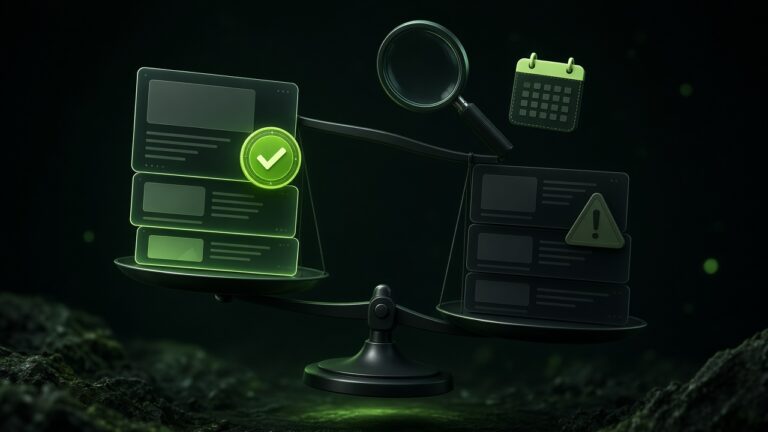
Bug Triage Process: A Simple System for Small Software Teams
When every bug feels urgent, nothing gets fixed in the right order. Here is a simple bug triage process for small software teams, and how an AI engineer can run it around the clock.
 AivoPass Editorial TeamReviewed by our agent setup specialists
Updated
Reading time4 min

A bug triage process collects every incoming issue, checks whether it can be reproduced, rates its severity and impact, assigns an owner and schedules the fix. Software Engineer Agent triages new issues around the clock, monitors production errors, proposes fixes in your repository and asks for review before anything ships.
In a small software team, bugs arrive from everywhere: customer emails, chat messages, error alerts and the founder’s phone. Without a clear bug triage process, the loudest issue wins, serious problems hide behind trivial ones and developers lose whole days switching between them.
This guide gives you a five-step triage process that works for teams of two to twenty, a severity table you can copy and an honest look at how Software Engineer Agent can run triage around the clock, watch production and propose fixes for your review.
See Software Engineer Agent Done-for-you setup · You approve every action
What is a bug triage process?
A bug triage process is a repeatable routine for handling new issues: collect them in one place, confirm they are real, rate their severity and impact, assign an owner and schedule the fix. It turns a noisy inbox of complaints into an ordered list of work.
The five-step bug triage process
- Collect everything in one tracker. Emails, chats and alerts all become issues.
- Reproduce and de-duplicate. Confirm the bug and link reports of the same problem.
- Rate severity and impact. How bad is it, and how many customers does it touch?
- Assign an owner and a time frame. Every confirmed bug has a name and a target.
- Fix, review and close the loop. Ship the fix after review and tell whoever reported it.
Severity levels you can copy
| Level | Example | Response |
|---|---|---|
| Critical | Checkout or sign-in broken for everyone | Immediately |
| High | A key feature fails for some customers | Within a day |
| Medium | A workaround exists | This week or next |
| Low | Cosmetic issue or typo | When convenient |
How Software Engineer Agent helps
- Triages incoming issues around the clock: reproduces, labels, links duplicates and suggests severity.
- Monitors production errors so problems are spotted before customers write in.
- Writes and fixes code inside your repository for confirmed bugs.
- Asks for review before merge, so your team approves every change.

Before and after
| Moment | Without a process | With Software Engineer Agent |
|---|---|---|
| New issue arrives | Read when someone has time | Triaged within minutes |
| Duplicate reports | Handled separately | Linked to one issue |
| Production error at night | Found the next morning | Flagged and investigated |
| Fix | Waits for a free afternoon | Proposed for review |
| Developer focus | Constant interruptions | Fewer context switches |

An example: a Saturday-night error
An online store in Toronto saw checkout errors spike late on a Saturday. Without a process, the team would have found out from angry emails on Monday. With the agent watching production, the error was flagged, matched to a recent change and a fix proposed as a draft. The on-call developer reviewed and approved it the same evening.
Who it is for
SaaS startups
A small SaaS company in Waterloo gets dozens of issues a week. Triage now happens continuously, and the weekly backlog review takes minutes instead of an hour.
Online stores with custom code
A Vancouver retailer relies on custom checkout code. Production monitoring means problems are caught before they cost sales.
Agencies maintaining client apps
A Calgary agency maintains several client apps. Each client’s issues are triaged the same way, and fixes always go through review.
Results to expect
These figures are typical estimates, not guarantees. Results depend on your codebase, issue volume and review speed.
Triage mistakes to avoid
- Everything marked urgent. If every bug is critical, none is.
- No reproduction step. Fixing a bug you cannot reproduce often fixes nothing.
- Forgetting the reporter. A quick “fixed, thank you” builds trust with customers.
- Letting the backlog rot. Close or merge stale issues regularly.
Safety and control
- Every fix is reviewed by your team before it ships.
- It works only in the repository and issue tracker you connect.
- All triage decisions are visible as labels and comments.
- You set the severity rules and who gets notified.
- Access can be revoked at any time.
Software Engineer Agent vs alternatives
| Option | Coverage | Speed | Developer interruptions |
|---|---|---|---|
| First come, first served | Business hours | Slow for serious bugs | High |
| On-call rota | Around the clock | Fast, but tiring | High for whoever is on call |
| Dedicated support engineer | Business hours | Medium | Lower |
| Software Engineer Agent | Around the clock | Triaged within minutes | Lower: review only |
How setup works
- Choose Software Engineer Agent and check out securely.
- Share how your team labels issues and reviews code today.
- We connect your repository and issue tracker and agree on severity rules with you.
- Go live: new issues are triaged, production is watched and fixes arrive for review.
Related agents
Supervise coding agents, audit your code every night or check each release before shipping. Browse all engineering AI agents or read more engineering guides.
The bottom line
A good bug triage process is simple: collect, reproduce, prioritise, fix and close the loop. The hard part is doing it every day, including nights and weekends. Software Engineer Agent handles that routine and proposes fixes, while your team keeps the final say on what ships.
Get Software Engineer Agent Issue triage around the clock · Production watched · Review before merge
Frequently asked questions
What is a bug triage process?
Bug triage is the routine of reviewing new issues, confirming them, rating how serious they are and deciding who fixes them and when. It makes sure the most harmful bugs are fixed first.
How often should a small team triage bugs?
New issues should be checked at least daily, with critical production errors handled as soon as they appear. Many small teams also hold a short weekly review of the backlog.
Does Software Engineer Agent push fixes to production?
No. It writes and proposes fixes inside your repository and asks for review before anything ships. Your team approves every change.
What does it need access to?
Your code repository and issue tracker, so it can read issues, link duplicates, monitor errors and propose fixes.
Is it a fit for a startup without a QA team?
Yes. It is built for startups and software teams that need issues triaged and production watched around the clock without hiring extra people.
See Software Engineer Agent in action.
Writes code, triages issues, monitors production and fixes bugs — working inside your repository and asking for review before anything ships.
We are the people who set up, connect and support AivoPass agents for businesses across Canada and beyond. Every guide is written from real setup work, reviewed by our specialists and updated when an agent changes.
- ✓ Done-for-you setup
- ✓ You approve every important action
- ✓ Secure PayPal checkout
- ✓ Built for Canadian businesses